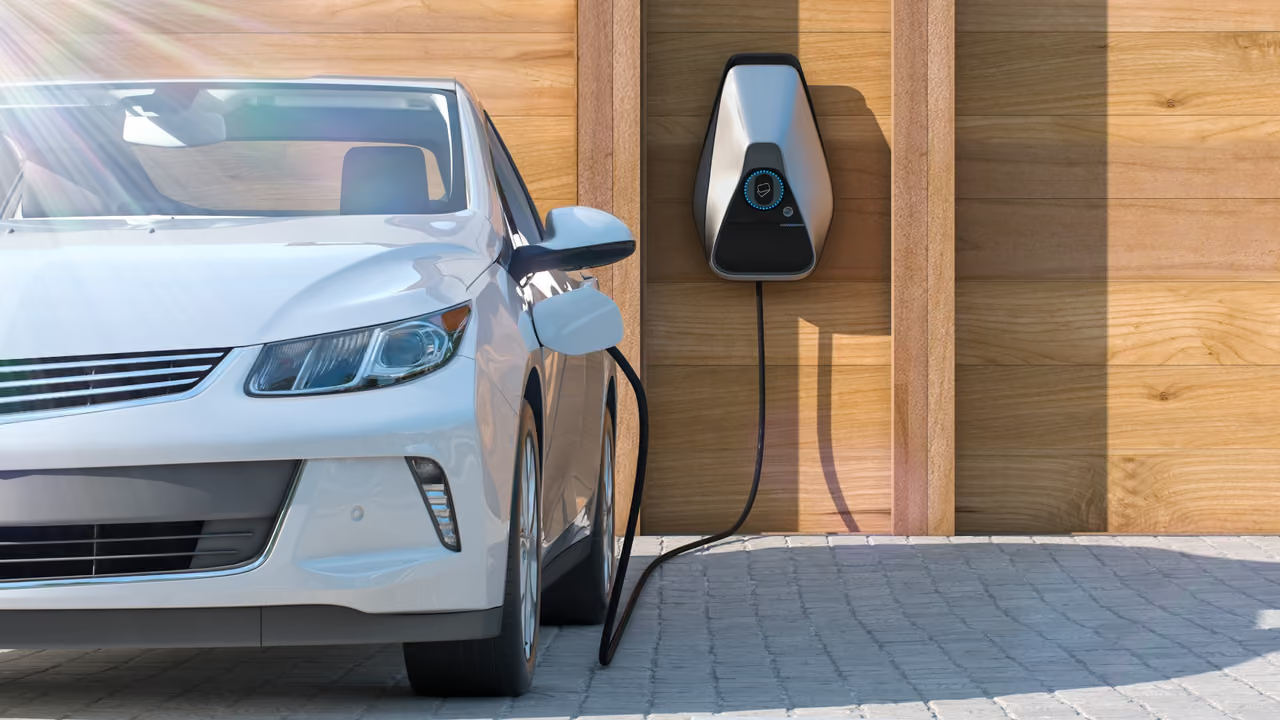
Electric cars are not just changing what’s under the hood—they’re reshaping the entire automotive supply chain and manufacturing landscape. The shift from internal combustion engines to electric drivetrains demands a radical rethink of materials, processes, and global logistics. This transformation is shaking up traditional suppliers and forcing manufacturers to innovate at every step.
Redefining Component Sourcing for Electric Vehicles
The core difference between electric vehicles (EVs) and traditional cars lies in their components. EVs rely heavily on batteries and electric motors, which require a completely different set of raw materials and parts than combustion engines. This shift has led automakers to rethink where and how they source these components.
Unlike the decades-old supply chains for engines, transmissions, and exhaust systems, EVs depend on lithium, cobalt, nickel, and rare earth elements. These materials are critical for battery cells and electric motors, but their supply chains are complex and often concentrated in a few geographic regions. For example, cobalt mining is heavily centered in the Democratic Republic of Congo, while lithium extraction is prominent in Australia, Chile, and Argentina.
This concentration has forced manufacturers to build more resilient and transparent supply chains. Automakers are investing in direct partnerships with mining companies, exploring alternative materials, and even developing in-house battery production capabilities. The sourcing strategy has shifted from a broad network of suppliers to a more vertically integrated model in many cases.
Innovations in Battery Production and Recycling
Batteries are the heart of electric cars, and their production has become a battleground for innovation. Traditional automakers, startups, and tech companies are racing to improve battery energy density, reduce costs, and increase production speed.
Gigafactories—massive battery production plants—are popping up worldwide, designed to churn out batteries at scale. These factories represent a new manufacturing paradigm, combining advanced automation with close supply chain integration. For instance, the ability to rapidly switch cathode chemistries or adapt production lines to new cell designs is a key advantage.
Recycling also plays a critical role in the battery supply chain. As millions of batteries reach end-of-life, reclaiming valuable metals becomes essential to reducing environmental impact and curbing reliance on virgin materials. Innovative recycling processes are emerging that can recover up to 90% of lithium, cobalt, and nickel from used cells, feeding these materials back into new batteries.
Manufacturers are integrating recycling into their business models, often partnering with specialized firms or developing their own facilities. This closed-loop approach not only supports sustainability goals but also insulates companies from volatile raw material prices.
Impact on Global Supply Chains and Labor Markets
The rise of electric vehicles is disrupting global supply chains in unprecedented ways. Traditional automotive parts suppliers are facing pressure as demand for internal combustion engine components declines. Meanwhile, new players specializing in battery cells, power electronics, and electric drivetrains are gaining prominence.
This shift is altering labor markets significantly. Regions that once thrived on engine manufacturing and assembly are experiencing job losses, while new opportunities are emerging in battery production hubs and tech-focused manufacturing centers.
For example, areas around gigafactories in the United States, China, and Europe are seeing rapid growth in skilled labor demand, including engineers, technicians, and logistics experts. At the same time, retraining programs are becoming crucial to help workers transition from traditional automotive roles to EV-related jobs.
Supply chain resilience has also become a top priority. The COVID-19 pandemic exposed vulnerabilities, leading companies to diversify suppliers and localize production where possible. The geopolitical landscape adds another layer of complexity, with trade tensions and resource nationalism prompting manufacturers to rethink their sourcing strategies.
Environmental Considerations in Manufacturing Electric Cars
The environmental promise of electric cars extends beyond zero tailpipe emissions. Manufacturing processes themselves are under scrutiny to ensure that EVs deliver genuine sustainability benefits.
Battery production, in particular, is energy-intensive and can have a significant carbon footprint if powered by fossil fuels. To address this, many manufacturers are investing in renewable energy for their factories. Tesla’s Nevada gigafactory, for example, aims to be powered largely by solar energy, reducing emissions associated with battery production.
Material sourcing also raises environmental concerns. Mining for lithium, cobalt, and nickel can lead to habitat destruction, water pollution, and human rights issues. Automakers are increasingly demanding responsible sourcing certifications and investing in technologies that reduce the need for conflict or environmentally damaging materials.
On the manufacturing floor, automakers are adopting leaner processes and circular economy principles. This includes minimizing waste, recycling scrap materials, and designing vehicles for easier disassembly and recycling at end-of-life. The push for eco-friendly manufacturing is not just regulatory compliance—it’s becoming a competitive differentiator as consumers pay closer attention to product footprints.