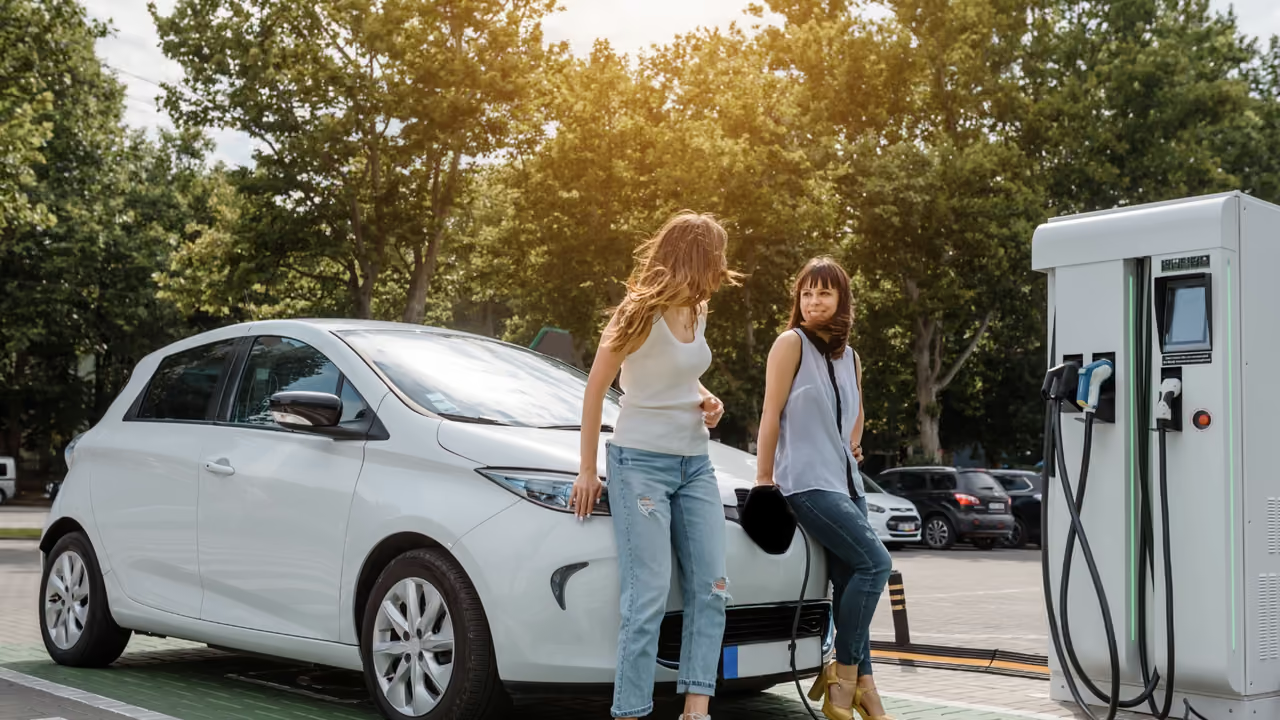
Can electric cars truly transform the air we breathe in crowded cities and improve public health? As urban areas grapple with smog, respiratory problems, and traffic congestion, electric vehicles (EVs) offer a promising solution—but the story is more complex than just swapping gas for electrons.
How Electric Cars Reduce Urban Air Pollution
Traditional internal combustion engine (ICE) vehicles emit a cocktail of pollutants: nitrogen oxides (NOx), particulate matter (PM), volatile organic compounds (VOCs), and carbon monoxide (CO). These substances contribute heavily to urban smog and poor air quality, which disproportionately affect densely populated areas.
Electric cars run on batteries and produce zero tailpipe emissions. This means no direct release of NOx, PM, or CO in the places where people live and work. By replacing ICE vehicles, EVs can dramatically cut the amount of harmful pollutants emitted on city streets, especially in traffic hotspots and near schools or hospitals.
However, it’s important to recognize that EVs are not emission-free in a broader sense. The generation of electricity powering them may come from fossil fuels, depending on the city’s energy mix. Still, even with coal-heavy grids, EVs tend to produce fewer overall emissions than conventional cars because power plants are usually located away from urban centers, spreading out pollution more thinly and often applying stricter controls.
Quantifying Health Benefits from Lower Emissions
Reduced air pollution from electric vehicles translates into tangible health benefits. Studies have linked lower levels of traffic-related pollutants to fewer cases of asthma, chronic bronchitis, heart disease, and even premature death.
For example, a report from the European Environment Agency estimated that widespread EV adoption could prevent thousands of premature deaths annually in major cities across Europe by cutting down vehicle emissions. Similarly, in US cities like Los Angeles and New York, which suffer from bad air quality, increasing EV use could reduce hospital admissions related to respiratory and cardiovascular conditions.
The World Health Organization identifies air pollution as a top environmental risk to health, responsible for millions of deaths worldwide each year. While EVs alone won’t solve this crisis, they are a crucial piece of the puzzle.
Challenges in Adopting EVs in Dense Urban Areas
Despite their benefits, introducing electric vehicles in crowded cities is fraught with challenges. One major hurdle is the availability of charging infrastructure. Many urban residents live in apartments or older buildings without private parking or dedicated charging points. This makes relying on home charging difficult and can discourage potential EV buyers.
Another issue is the upfront cost of EVs, which remains higher than comparable gasoline cars. While prices are gradually falling and incentives exist, the financial barrier still limits adoption among lower-income urban populations.
Moreover, the increased demand for electricity to power EVs could strain aging urban grids unless investments in capacity and renewable energy sources keep pace. Cities with outdated electrical infrastructure might face blackouts or increased emissions if fossil fuels fill the gap.
Finally, electric cars do not directly address other urban traffic issues like congestion and noise pollution. Without complementary policies encouraging public transit, biking, and walking, EVs may simply replace one form of car pollution with another, albeit cleaner in terms of air quality.
Policy Measures to Maximize Public Health Gains
City governments and policymakers hold the key to unlocking the full health benefits of electric vehicles. Here are some critical measures that can help:
- Expand and improve charging infrastructure: Prioritize public charging stations in residential areas, workplaces, and transit hubs. Incentivize private developments to include EV chargers and streamline permitting processes.
- Implement financial incentives: Subsidies, tax credits, and reduced registration fees can lower upfront costs for consumers, making EVs more accessible.
- Integrate EVs into broader sustainable transport plans: Encourage multimodal transit options to reduce overall car dependency, combining EV adoption with public transportation, cycling lanes, and pedestrian-friendly streets.
- Promote renewable energy: Align EV expansion with investments in solar, wind, and other clean energy sources to ensure the electricity powering these vehicles is truly green.
- Enforce low-emission zones: Restrict or charge fees for high-polluting vehicles in city centers to accelerate the shift toward electric and cleaner alternatives.
When coordinated thoughtfully, these policies can amplify the positive impact of electric cars, not only reducing pollution but also improving urban quality of life and health outcomes.