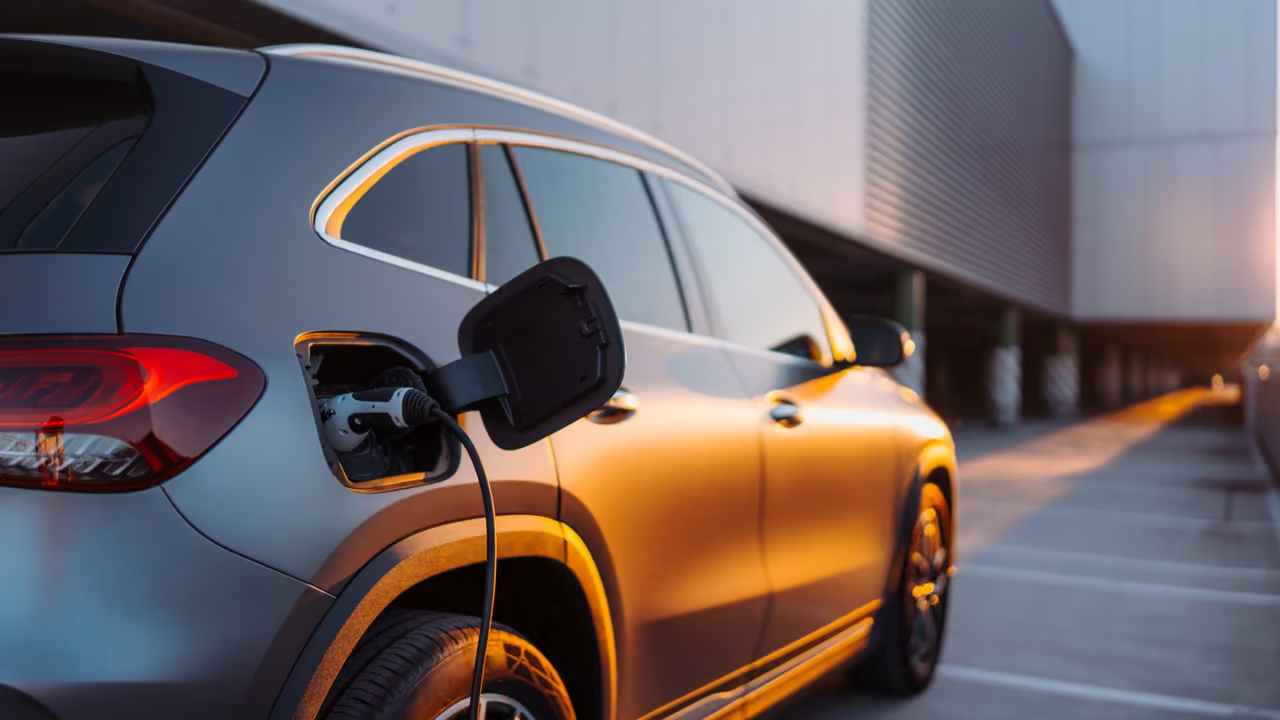
Are electric cars really as green as we think once we look beyond their lack of tailpipe emissions?
Battery Production and Resource Extraction Impacts
Electric vehicles (EVs) run on lithium-ion batteries, but making these batteries is far from harmless to the environment. Mining the raw materials—lithium, cobalt, nickel, and manganese—often damages landscapes and ecosystems. For example, lithium mining in South America’s “Lithium Triangle” uses huge amounts of water in dry areas, putting local farms and water supplies at risk.
Cobalt mining is mostly done in the Democratic Republic of Congo, where it not only harms the environment but also raises serious ethical issues, including child labor. Mining releases greenhouse gases, creates toxic waste, and can pollute soil and water. While some battery makers are trying to source materials more responsibly, the environmental and social costs of mining remain major problems.
Mining operations also disrupt local communities and wildlife habitats. Roads and heavy machinery fragment ecosystems, making it harder for animals to survive. In some cases, mining has forced indigenous people off their land, causing social conflicts that often go unnoticed.
Electricity Generation Sources and Their Environmental Footprint
Charging an electric car is only as clean as the electricity behind it. In countries that rely heavily on coal or natural gas, the environmental benefits of EVs shrink. Coal plants emit large amounts of greenhouse gases and pollutants, which add to the car’s carbon footprint indirectly.
On the flip side, places with lots of renewable energy—like wind, solar, and hydropower—offer much cleaner charging. Norway is a prime example, where most electricity comes from hydropower. This makes EVs there truly low-emission. But in countries like Poland or parts of the US Midwest, where coal still dominates, electric cars can cause emissions similar to efficient gasoline cars.
Improving the power grid and expanding renewable energy are key if electric cars are to live up to their green promise. Until then, the impact of EVs depends heavily on where and how the electricity is made.
Even natural gas power plants, while cleaner than coal, still release significant carbon dioxide. This means that in regions relying on gas, EVs are cleaner than gasoline cars but not by a huge margin. The pace of renewable energy growth will shape how green electric cars really become.
End-of-Life Battery Recycling and Waste Management
Electric car batteries don’t last forever. After 8 to 15 years, their capacity drops below what’s needed for driving. What happens next is a growing environmental challenge.
Battery recycling is still limited and expensive. Recycling can recover valuable metals, but some methods use hazardous chemicals and a lot of energy. If batteries aren’t recycled properly, heavy metals can leak into soil and water, causing pollution.
One solution is giving batteries a second life. Used EV batteries can be repurposed for energy storage or balancing the electric grid. This extends their usefulness and delays the need for recycling. However, the system for reusing and recycling batteries is still in its early stages. Without better recycling and reuse, the coming wave of old batteries could overwhelm waste systems worldwide.
Some companies are developing new recycling methods that use less energy and fewer toxic chemicals. These innovations could reduce the environmental impact of battery disposal and make recycling more cost-effective. Still, scaling these technologies will take time and investment.
Comparing Lifecycle Emissions of Electric Cars Versus Traditional Vehicles
To understand the true environmental impact, we must look at the entire lifecycle of vehicles—from mining raw materials to manufacturing, use, and disposal. EVs usually produce more emissions during manufacturing, mainly because of the battery. Studies estimate that making an EV can cause 30 to 70 percent more emissions than building a similar gasoline car.
But EVs emit far less during their use, especially when charged with clean electricity. Over their lifetime, this operational advantage often cancels out the higher production emissions, leading to lower total emissions for electric cars.
The balance is fragile. If the electricity comes from fossil fuels or if batteries need replacing multiple times, the environmental edge shrinks. On the other hand, advances in battery tech, better recycling, and cleaner power grids can widen the gap in favor of EVs.
For example, improvements in battery energy density mean fewer raw materials are needed per kilowatt-hour of storage. This reduces the emissions from mining and manufacturing. Also, longer-lasting batteries mean fewer replacements, cutting down waste and emissions over time.