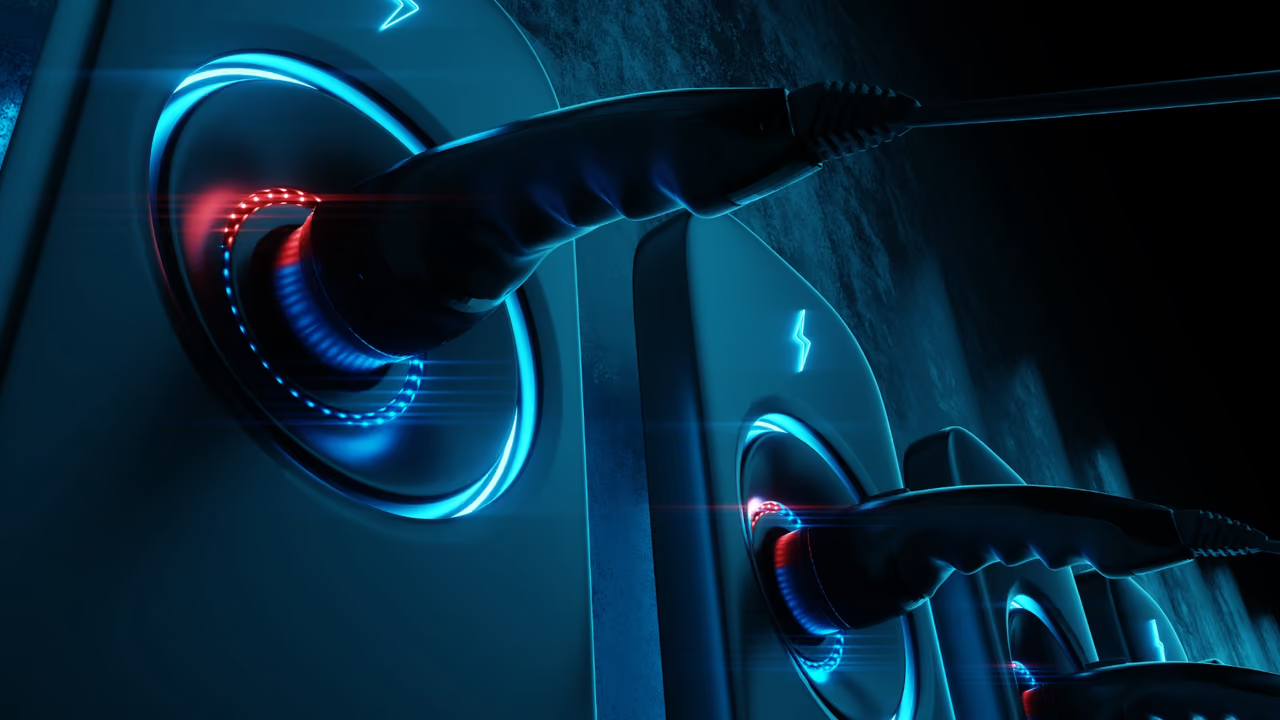
Electric vehicle charging is at a crossroads, with a fragmented landscape of connectors that can either empower drivers or frustrate them. As automakers, governments, and charging networks push for wider adoption of EVs, the question of how to make charging simple and seamless is more urgent than ever. The evolving standards around EV charging connectors offer a glimpse into the future of mobility—one where convenience and innovation must go hand in hand.
Current EV Charging Connector Standards
At present, several types of charging connectors coexist globally, each with its own technical specifications and regional preferences. The most common ones include:
- Type 1 (SAE J1772): Predominantly used in North America and Japan for AC Level 1 and Level 2 charging. It supports up to 19.2 kW and is mainly found on older and some current EVs.
- Type 2 (Mennekes): The standard in Europe, designed for both single-phase and three-phase AC charging, with power up to 43 kW in public stations and higher in some cases.
- Combined Charging System (CCS): An extension of Type 1 and Type 2 connectors that adds two DC pins for fast charging. CCS has become the dominant fast-charging standard in Europe and North America.
- CHAdeMO: A Japanese fast-charging standard capable of delivering up to 100 kW DC. It was widely adopted early on but is now gradually being eclipsed by CCS.
- Tesla Proprietary Connectors: Tesla uses its own connector design in North America, combining AC and DC capabilities. However, it has started to include CCS compatibility in Europe and is opening its network in some regions to non-Tesla EVs.
Each connector type reflects a different approach to power delivery, safety protocols, and communication between vehicle and station. While this diversity has driven innovation, it also creates a patchwork experience for EV owners worldwide.
Challenges of Multiple Connector Types
The coexistence of multiple connector standards creates several hurdles for consumers and the industry alike:
- Consumer Confusion: Drivers may encounter incompatible plugs at charging stations, leading to frustration and wasted time. Visitors to foreign countries often face the challenge of finding compatible chargers or carrying adapters.
- Infrastructure Complexity: Charging network operators must install multiple connector types to serve different vehicles, increasing installation and maintenance costs.
- Slower Adoption: The lack of a unified system can deter potential EV buyers who fear the inconvenience of limited charging options.
- Manufacturing Challenges: Automakers need to equip vehicles with different charging ports to sell in multiple markets, which complicates design and supply chains.
Adapters can partially mitigate these issues, but they add another layer of complexity and potential points of failure. The industry’s fragmented state hampers the user experience that electric mobility desperately needs to thrive.
Industry Efforts Towards Universal Compatibility
Recognizing these challenges, stakeholders across the EV landscape are working towards greater standardization and interoperability.
- Adoption of CCS as the Global Fast-Charging Standard: CCS has gained widespread support from major automakers and charging networks, especially in Europe and North America. It combines AC and DC charging capabilities in a single plug, simplifying infrastructure requirements.
- Phasing Out CHAdeMO: While still common in Japan and some markets, CHAdeMO is losing ground as CCS expands. Some manufacturers offer vehicles with both connectors during the transition.
- Tesla’s Moves: Tesla’s decision to include CCS ports on European vehicles and open its Supercharger network to non-Tesla EVs signals a shift toward compatibility and cooperation.
- Government Regulations: The European Union has mandated CCS as the standard for fast charging to streamline the market. Similar regulatory moves in other regions are encouraging uniformity.
- Development of Multi-Standard Chargers: Charging station manufacturers increasingly produce units that support multiple connectors, but this remains a stopgap rather than a long-term solution.
These efforts show an industry aware that the future of EV charging depends on breaking down barriers, not building new ones.
Benefits of Standardization for Consumers and Manufacturers
Moving toward a universal EV charging connector standard offers tangible benefits:
- Enhanced Convenience: Drivers can charge their vehicles anywhere without worrying about plug compatibility or carrying multiple adapters.
- Reduced Costs: Charging networks can focus on a single connector standard, lowering installation and maintenance expenses. Automakers simplify vehicle designs and streamline production.
- Faster Infrastructure Deployment: Standardization accelerates the rollout of charging stations, making EV ownership more practical and appealing.
- Encouragement of Innovation: With a stable standard, companies can focus on improving charging speed, efficiency, and user experience rather than managing compatibility issues.
- Better Integration: Standard connectors facilitate smarter grid integration and vehicle-to-grid technologies, supporting renewable energy and grid stability.
The transition to universal standards is not without challenges—legacy vehicles, regional market differences, and technological advances will continue to shape the landscape. Still, the momentum toward simplification signals a maturing EV industry ready to meet consumer expectations and drive innovation forward.